

Key takeaways
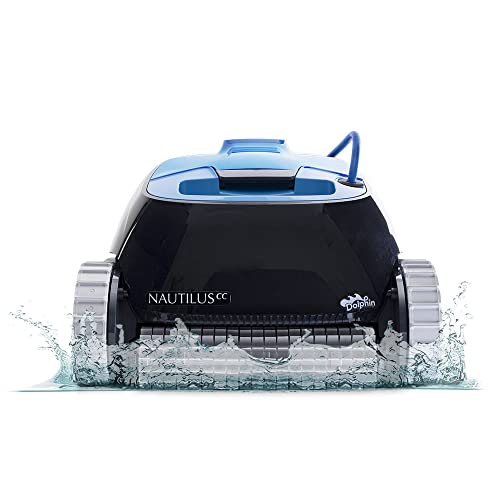
- Best overall budget robot: Dolphin Escape. Corded, floor-only, built for pools up to 33 ft.
- Cheapest way to stop daily debris: Aiper Scuba SE, a cordless floor cleaner for light work.
- Best cordless with wall and waterline cleaning: Aiper Scuba S1.
- Best value for waterline and app control: Wybot C1.
- Best budget robot that climbs walls: Dolphin Explorer E20.
- Best low-cost suction cleaner for vinyl or plaster: Zodiac Baracuda G3.
- Best suction cleaner for a variable-speed pump: Zodiac MX6.
- Best vinyl-specific suction option for pools up to 20 by 40 ft: Hayward Navigator Pro (vinyl version).
For a small inground pool on a tight budget, the Dolphin Escape is the safest corded robot, the Aiper Scuba SE is the cheapest cordless way to cut daily skimming, and the Zodiac Baracuda G3 is the lowest-cost proven suction cleaner if your pump and skimmer can drive it. Everything else in this guide is about knowing which compromise you are accepting when you buy at the low end.
“Small” in this guide means an inground pool roughly 12 by 24 feet up to about 16 by 32 feet, or around 400 to 600 square feet of floor. That size matters because most budget cleaners are rated for larger pools than they clean well. A unit that struggles on a 1,600 square foot rating will often do fine on a 450 square foot pool, which is why a lower-priced model can be the right call here when it would be the wrong call on a big pool.
Our top picks


As an Amazon Associate we earn from qualifying purchases at no extra cost to you.
Quick picks by situation
- Best overall budget robot: Dolphin Escape. Corded, floor-only, built for pools up to 33 ft.
- Cheapest way to stop daily debris: Aiper Scuba SE, a cordless floor cleaner for light work.
- Best cordless with wall and waterline cleaning: Aiper Scuba S1.
- Best value for waterline and app control: Wybot C1.
- Best budget robot that climbs walls: Dolphin Explorer E20.
- Best low-cost suction cleaner for vinyl or plaster: Zodiac Baracuda G3.
- Best suction cleaner for a variable-speed pump: Zodiac MX6.
- Best vinyl-specific suction option for pools up to 20 by 40 ft: Hayward Navigator Pro (vinyl version).
How we chose these cleaners
This is a research-based roundup, not a lab report. We compared manufacturer specification pages, retailer listings and several independent buyer guides published for 2026, then kept only cleaners that are currently sold, rated for inground use and sized sensibly for a small pool. We discarded models rated only for above-ground or flat-bottom pools, and models whose listed filtration or runtime was too thin to finish a small pool in one cycle.
We ranked on five criteria: coverage (floor only, floor plus walls, waterline), filtration style, cycle length or pump load, parts that wear out, and how much setup the pool needs (a dedicated outlet, a skimmer port, a booster pump). Where a spec could not be confirmed from a manufacturer source, we describe it by class instead of quoting a figure.
The two budget paths: suction versus entry robotic
At the low end you are choosing between two very different machines. A suction cleaner hooks to your skimmer or a dedicated suction port and uses your pool pump to pull itself around, collecting debris in the pump basket or skimmer basket. It has almost no electronics, so there is little to break. The trade is that your pump runs longer, your filter takes the debris load, and results depend on your plumbing.
An entry robotic cleaner has its own motor and its own filter basket or cartridge. It does not care what your plumbing looks like. The trade is a higher purchase cost, a cable or battery to manage, and a filter you must empty after most cycles. Corded units plug into a transformer; cordless units run on a battery and a magnetic or USB-style charger.
What you give up at a low price
- Wall and waterline cleaning. Most cheap robots clean the floor only. The waterline, where oils and pollen leave a ring, usually needs a brush or a mid-range cordless unit.
- Navigation. Cheaper robots use simple random or semi-structured patterns. On a small rectangular pool, that is fine. On a kidney or freeform shape they can miss corners.
- Fine filtration. Entry filters are coarser, so very fine silt and pollen can stay suspended and settle later.
- Battery life. Cordless budget units commonly run 90 to 120 minutes per charge, which is enough for a small pool but leaves no margin for a green or leaf-covered pool.
- Warranty and support. Very cheap marketplace brands often have thin parts availability; established pool brands usually have replacement brushes, tracks and filters in stock.
Budget comparison table
| Model | Type | Surfaces cleaned | Rated pool size | Notable spec | Power / setup |
|---|---|---|---|---|---|
| Dolphin Escape | Corded robot | Floor only | Up to 33 ft | Dual DC motors, 4,000+ GPH filtration, about 14 lb | 40-ft cable, 2-year warranty |
| Aiper Scuba SE | Cordless robot | Light floor cleaning | Small pools | Entry-level price tier | Battery, no cable |
| Aiper Scuba S1 | Cordless robot | Floor, walls, waterline | Up to 1,600 sq ft | 270-minute Eco runtime, 3-micron dual filtration | Battery, no cable |
| Wybot C1 | Cordless robot | Floor and waterline | Inground | About 3,038 GPH suction, app control | Battery, shorter runtime |
| Dolphin Explorer E20 | Corded robot | Floor and walls | Up to 33 ft | Wall climbing | Transformer and cable |
| Zodiac Baracuda G3 | Suction | Floor and walls | Most inground sizes | 36-fin disc, about 39 ft hose, about 21 lb | Skimmer or suction port |
| Zodiac MX6 | Suction | Floor and walls | Inground | Cyclonic suction, X-Drive bi-directional navigation | Skimmer or suction port |
| Hayward Navigator Pro | Suction | Floor and walls | Up to 20 x 40 ft | SmartDrive, about 17.7 lb | Skimmer or suction port |
Tier one: the corded budget robots
Dolphin Escape
Spec line: Corded · floor only · up to 33 ft pools · dual DC motors · 4,000+ GPH filtration · about 14 lb · 40-ft cable · 2-year warranty.
The Escape is the benchmark for entry-level robots on small inground pools. It is light enough to lift out alone, the cable is long enough for a pool well beyond the small range, and the warranty is longer than many low-end competitors offer. It does not climb walls or scrub the waterline, so budget a few minutes with a hand brush each week.
Best for: small rectangular pools with a flat or gently sloped floor where the main job is floor debris. Skip if: you want the walls and waterline cleaned automatically.
- Pros: light, simple, long cable, longer warranty, parts support from an established brand.
- Cons: floor only, cable can tangle without a swivel habit, no waterline work.
Dolphin Explorer E20
Spec line: Corded · floor and walls · up to 33 ft pools · wall-climbing capable.
The E20 is the step up when walls matter. It is still a budget-to-mid-range machine, but the wall climbing means a smaller scum line and less algae on the vertical surfaces. For a small pool with steps and benches, the extra coverage can be worth the added cost, since it reduces the hand brushing the Escape leaves you.
Best for: small pools with visible wall film or pollen buildup. Skip if: your pool is mostly floor debris and you prefer the lower price of the Escape.
- Pros: wall climbing, trusted brand, works regardless of your plumbing.
- Cons: costs more than the Escape, still a corded unit with a transformer to place.
Tier two: the cordless budget robots
Aiper Scuba SE
Spec line: Cordless · light floor cleaning · small pools · entry-level price tier.
The Scuba SE is the cheapest credible way to get a robot into a small pool. It handles light, regular debris such as dust and a few leaves. It is not designed for heavy leaf loads or a pool that has been neglected for weeks, and its runtime is short compared with the S1.
Best for: small, covered or sheltered pools that get light debris. Skip if: trees overhang the pool or you want wall coverage.
- Pros: lowest entry cost in this list, no cable, easy to store.
- Cons: light duty only, shorter battery life, floor only.
Aiper Scuba S1
Spec line: Cordless · floor, walls and waterline · up to 1,600 sq ft · 270-minute Eco runtime · 4-zone cleaning · 3-micron dual filtration.
For a small pool, the S1 is oversized in the best way: the long Eco runtime gives it plenty of margin, and waterline coverage removes the weekly ring scrub. It costs more than the SE but remains the budget-end choice for a full-coverage cordless unit.
Best for: owners who want a no-cable, full-coverage robot. Skip if: you only need floor cleaning and want to spend less.
- Pros: floor, wall and waterline, long runtime, fine filtration.
- Cons: above the cheapest tier, battery eventually degrades and is a replacement cost.
Wybot C1
Spec line: Cordless · floor and waterline · about 3,038 GPH suction · app control · shorter runtime.
The C1 is widely described as strong value because it brings waterline coverage and app control at a low price. Its suction is lower than the best corded robots and its runtime is shorter, which is fine on a small pool but a limit if leaves are common.
Best for: small pools with a waterline film and owners who like app scheduling. Skip if: you need to clear heavy debris in one cycle.
- Pros: waterline coverage, app control, accessible price.
- Cons: lower suction, shorter runtime, newer brand with a shorter track record.
Tier three: low-cost suction cleaners
Zodiac Baracuda G3
Spec line: Suction · floor and walls · 36-fin disc · about 39 ft hose · about 21 lb · works with vinyl, fiberglass, tile and plaster.
The G3 has no wheels, gears or flappers, and the diaphragm is the main wear part. It adjusts to the flow it receives, which makes it tolerant of lower-horsepower pumps. On a small pool, a single hose length reaches everywhere, and the simple mechanism keeps ownership cost low.
Best for: homeowners who want the lowest ownership cost and are comfortable with the pump running longer. Skip if: your skimmer is far from the deep end or your pump is undersized.
- Pros: few moving parts, easy repairs, works with several surface types.
- Cons: loads your pump basket and filter, pattern is somewhat random, lighter on fine silt.
Zodiac MX6
Spec line: Suction · floor and walls · cyclonic suction · X-Drive bi-directional navigation · low-flow design for variable-speed and two-speed pumps.
The MX6 is the suction pick when your pump is variable-speed, because Zodiac designs it to work at lower flow. It tends to move faster and climb walls better than simpler suction units, according to independent buyer guides.
Best for: pools with a variable-speed pump and a dedicated suction line. Skip if: you want the absolute lowest purchase cost.
- Pros: strong wall climbing, runs on lower flow, good navigation.
- Cons: costs more than the G3, still taxes your filter.
Hayward Navigator Pro
Spec line: Suction · floor and walls · up to 20 x 40 ft · SmartDrive · about 17.7 lb · tool-free hookup.
Hayward sells separate Navigator Pro versions for different pool surfaces, so match the version to your finish. It is rated for pools up to 20 by 40 ft, which covers nearly every small inground pool, and installs in under ten minutes without tools.
Best for: owners who want a simple suction cleaner from a brand with wide parts support. Skip if: you have a very low-powered pump.
- Pros: easy setup, wide parts availability, surface-specific versions.
- Cons: must match the right version to your surface, pump-dependent.
Worked example: cost of ownership on a small pool
Use this method with your own numbers. The figures below are assumptions for illustration, not measured results.
- Suction cleaner energy. Assume a 1.5 HP single-speed pump draws about 1.6 kW. If the cleaner forces you to run the pump 3 extra hours per day, that is 1.6 x 3 = 4.8 kWh per day, or about 144 kWh per 30-day month.
- Robot energy. Assume a corded robot draws about 0.15 kW and runs 2.5 hours per cycle, three cycles a week. That is 0.15 x 2.5 x 12 cycles = about 4.5 kWh per month.
- Difference. 144 minus 4.5 leaves roughly 140 kWh per month. Multiply by your local rate per kWh to see the monthly gap.
- Correct for a variable-speed pump. At low speed a variable-speed pump may draw only 0.3 kW, so 0.3 x 3 x 30 = 27 kWh per month. The gap shrinks sharply, which is why the MX6 and variable-speed pairing is attractive.
- Add wear parts. A suction cleaner’s cost is mainly a diaphragm, tires or discs and hose cuffs. A robot’s is filters, brushes or tracks and, for cordless models, an eventual battery.
Conclusion: if you already run a single-speed pump for many hours, an entry robot often pays back through reduced pump runtime. If you have a variable-speed pump, a suction cleaner is usually the cheapest to own.
Which one fits your pool
| Your situation | Best fit | Why |
|---|---|---|
| Single-speed pump, light debris | Dolphin Escape | Removes pump load, floor-only is enough |
| Single-speed pump, wall film | Dolphin Explorer E20 | Adds wall coverage with the same low pump load |
| Variable-speed pump, dedicated suction line | Zodiac MX6 | Designed for low-flow operation |
| Tight budget, simple plumbing | Zodiac Baracuda G3 | Fewest wear parts |
| Wants no cable and waterline cleaning | Aiper Scuba S1 | Long runtime, three-surface coverage |
| Light debris only, lowest spend | Aiper Scuba SE | Cheapest robot option |
Buying checklist for small inground pools
- Match the surface. Vinyl, fiberglass and plaster each wear differently; check that the brush or track type is rated for your finish.
- Check the cable or hose length. It should reach the farthest point of the pool, including around steps, with slack.
- Confirm the filter type. Cartridge and basket filters differ in how often you must clean them.
- Read the warranty and parts list. Look for replaceable brushes, tracks and filters.
- Think about storage. A cordless unit needs a charging spot; a corded unit needs a transformer location away from the water.
Frequently asked questions
What is the cheapest cleaner that actually works for a small inground pool?
A low-cost suction cleaner like the Zodiac Baracuda G3 or a cordless entry robot like the Aiper Scuba SE. Pick suction if your plumbing supports it, robotic if you want independence from the pump.
Both handle regular light debris. Neither is the right tool for a pool that has already turned green, which needs a shock, a brush and a filter cleaning before any cleaner helps.
Are cheap robotic cleaners reliable?
Established brands with replaceable parts and warranties, such as Dolphin and Zodiac, are more reliable than very cheap marketplace models. Check warranty length and parts availability before buying.
Some very cheap listings are rated for flat-bottom pools only, which can be a problem if your pool has a slope toward the deep end.
Do cordless pool cleaners last long enough for a small pool?
Yes, in most cases. Budget cordless units commonly run 90 to 120 minutes, and a small pool often needs less than that in a single cycle.
Models with long Eco modes, such as the Aiper Scuba S1 at 270 minutes, give extra margin for leaves.
Is a suction cleaner or a robot cheaper to run?
It depends on your pump. With a single-speed pump, a robot is usually cheaper to run; with a variable-speed pump at low speed, a suction cleaner can be cheaper.
Use the worked example above and plug in your own pump wattage and local electricity rate.
Will a budget robot clean the waterline?
Most do not. Waterline cleaning appears on cordless models such as the Aiper Scuba S1 and Wybot C1, and on higher-priced corded units.
If your cleaner skips the waterline, plan on a quick weekly brush or a tile-line sponge.
Can I use a suction cleaner with a variable-speed pump?
Yes, if the cleaner is designed for low flow. The Zodiac MX6 is specifically engineered for variable-speed and two-speed pumps.
Set the pump speed per the cleaner manual and watch for stalling in corners; adjust speed or hose length if needed.
How often should I run a budget cleaner?
Three to five cycles per week is typical for a small pool, more during pollen or leaf season. Empty or rinse the filter after each cycle.
A clogged filter reduces suction and navigation quality faster than any other single cause.
What gets worn out first on a budget cleaner?
On suction models it is the diaphragm, tires or disc and hose cuffs. On robots it is brushes, tracks, filters and, for cordless units, the battery.
Check that replacements are available before you buy, since parts support matters more at the low end than the sticker price.




Write Your Review
No reviews yet. Be the first to share your experience!