

Key takeaways
- Compare the best toy pianos and keyboards for kids, from a touch piano for babies to wooden 25-key pianos and a 54-key keyboard with lessons.
The real decision is not piano versus keyboard in the abstract; it is matching the instrument to the child’s hands and attention span right now. A baby needs a surface that answers a slap with a note, a preschooler needs keys laid out like a real piano so first songs transfer later, and an older beginner needs enough full-size keys to stop outgrowing the instrument by spring.
This roundup serves three groups: parents of babies and toddlers making their very first sounds, families shopping for a preschooler’s first song-learning piano, and buyers of older kids who are closing in on real lessons. Every product was chosen from the names and specifications on its Amazon page, including key counts, power sources, included songbooks, and stated age ranges.
Quick Picks
As an Amazon Associate we earn from qualifying purchases.
| Product | Best for | Key spec from title |
|---|---|---|
| Baby Einstein and Hape Magic Touch Piano | Babies who can tap before they can press a key | Wooden Musical Toddler Toy, Age 6 Months and Up |
| Melissa & Doug Learn-to-Play Piano | Preschoolers learning first songs by color | 25 Keys and Color-Coded Songbook |
| Schoenhut My First Piano II | A toddler who wants a piano shaped like a real grand | 25 Keys Pink Piano for Kids |
| M SANMERSEN Piano Keyboard for Beginners | Sing-along players who need a microphone included | 37 Keys with Mic LED Screen |
| RockJam 54 Key Keyboard Piano | Older beginners ready for full-size keys | 54 Key with Piano Note Stickers & Lessons |
How to Choose
Match the Key Count to Hand Size and Stage
Key count only matters relative to the player. Babies do not need keys at all in the mechanical sense; a touch surface that sounds a note wherever a palm lands teaches cause and effect without demanding finger strength. Preschoolers benefit from twenty-five real keys spanning two octaves, because that layout mirrors a grown-up piano and lets both hands play simple melodies. Once a child reads songbook notation and plays with two hands, thirty-seven mini keys or fifty-four full-size keys stop the constant running out of room that makes practice feel pointless.
Decide Between Chime Tone and Electronic Sound
Wooden toy pianos make sound with metal chime bars struck by the key mechanism, so the tone is fixed, gentle, and impossible to turn down. Electronic keyboards trade that simplicity for range: hundreds of tones, rhythm patterns, and demo songs, plus volume control and sometimes a headphone jack. The chime piano suits shared living spaces and parents who want zero setup. The electronic board suits children who get bored with one sound and families who want a quiet-practice option after bedtime. Neither is better; they solve different household problems.
Sort Out Power Before It Reaches the Playroom
Every electronic pick here feeds differently. The Magic Touch Piano runs on three AA batteries, the M SANMERSEN carries a built-in rechargeable battery charged by USB cable, and the RockJam ships with a mains power supply. Battery models move from room to car to grandma’s house without a cord hunt, but they die mid-song if nobody stocked spares. A rechargeable board removes the battery drawer problem while adding a charging routine. A plug-in keyboard never runs dry at home yet stays tethered to one outlet and one room.
Look for a Learning Aid Your Child Will Actually Use
The teaching extras differ more than the brochures suggest. Color-coded songbooks work because the child matches a colored note on the page to the same color on the key, producing a recognizable tune in the first sitting. Note stickers do the same job on a plain keyboard but peel and shift over time. Follow-along demo modes and lesson apps suit older children who can copy a highlighted key sequence. Pick the aid that matches your child’s reading stage, not the one with the longest feature list.
The 5 Best Options
Baby Einstein and Hape Magic Touch Piano
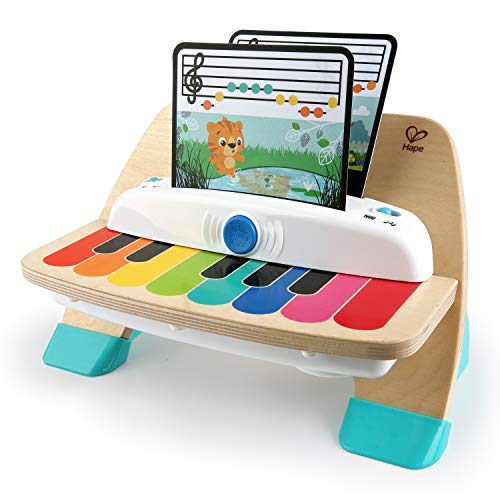
This wooden piano has no keys to press at all. The printed keyboard on its flat wooden surface responds to a tap or a swipe, so a baby who can only slap and drag a hand still gets real note sequences instead of random jingles. Three included sheet music cards use color matching to guide first songs, and a volume switch keeps the output at a level adults can live with. It is the one pick here genuinely sized for the six-month-to-three-year window, and the flat top wipes clean after snack-time concerts.
Specs
- Material: Wood
- Model number: 11649
- Keys: 25 touch points on a printed keyboard surface
- Batteries: 3 AA required, not included
- Age range: 6 to 36 months
- Included: Piano, 3 sheet music cards
- Item weight: 1.68 pounds
- Dimensions: 6.9 x 13.8 x 8.3 inches
Best for: Babies and young toddlers who are still in the tap-everything stage.
Watch out for: The touch surface builds no finger strength, so a child nearing three may be ready for real keys sooner than the age range suggests.
ASIN: B07CP2FCCV
Melissa & Doug Learn-to-Play Piano

This is the classic first real piano: twenty-five proper keys across two full octaves, laid out with the same black-and-white pattern a child will meet at lessons later. The included color-coded songbook turns that layout into early success, because matching colors is a skill a three-year-old already has. The upright wooden body sits on a tabletop or the floor and needs no batteries, no charging, and no volume negotiations with the neighbors. For a preschooler who wants to play actual songs rather than explore sounds, this is the most direct route in the roundup.
Specs
- Keys: 25, spanning two full octaves
- Included: Color-coded songbook
- Model number: 1314
- Age range: 3 years and up
- Material: not stated
- Dimensions: not stated
- Power: None required, acoustic chime action
Best for: Preschoolers who are ready to follow a songbook and play real melodies.
Watch out for: This listing is the standard multicolor version; the pink and blue finishes sell under separate listings, so confirm the color on the page before ordering.
ASIN: B00020V59S
Schoenhut My First Piano II

Schoenhut builds the miniature grand piano many parents picture when they imagine a first instrument: a baby-grand silhouette with twenty-five keys and a proper keyboard layout scaled down for small hands. Its Tri-Play learning system uses play-by-color materials to move a child from random banging to following simple songs. The chime tone is softer and rounder than most electronic boards, which makes it the easiest pick to live with in an apartment. Choose it for the toddler who cares how the piano looks and sits at it like furniture, not a gadget.
Specs
- Keys: 25
- Model number: 2522P
- Color of this listing: Pink
- Learning system: Tri-Play play-by-color
- Dimensions: not stated
- Material: not stated
- Power: None required, acoustic chime action
Best for: Toddlers and preschoolers who want a piano that looks and feels like the real thing.
Watch out for: Toy pianos sound chime bars, not strings, so do not expect concert tone; the listing’s dimension fields vary, so measure your space against the current product details.
ASIN: B001AWXGD0
M SANMERSEN Piano Keyboard for Beginners

This thirty-seven-key board is built around performance rather than quiet practice. A microphone is included for sing-along sessions, dual speakers carry the sound, and an LED display walks beginners through the built-in library of two hundred tones, two hundred rhythms, and fifty demo songs. The rechargeable battery is the practical headline: it charges by USB cable and frees the keyboard from both the wall outlet and the AA battery drawer. Record and playback functions let a child hear their own attempts back, which is the moment many beginners start self-correcting.
Specs
- Keys: 37
- Tones: 200
- Rhythms: 200
- Demo songs: 50
- Battery: Built-in 1200mAh rechargeable, USB charging, included
- Speakers: Dual speakers
- Display: LED screen
- Microphone: Included
- Size: 22.9 x 7.9 x 1.8 inches
- Model number: RM
Best for: Children aged three to eight who sing, perform, and play away from an outlet.
Watch out for: The keys are mini-width rather than full-size, so a child starting formal lessons will eventually need a wider keyboard to match their teacher’s piano.
ASIN: B09245HZTP
RockJam 54 Key Keyboard Piano

The RockJam is the step that ends the toy stage. Fifty-four full-size keys give two hands room to work, an LCD screen shows what the player has selected, and the box includes the things beginners otherwise buy separately: a power supply, a sheet music stand, and note stickers for the keys. Access to Simply Piano lessons is bundled, giving a structured path once random exploration loses its shine. It is marketed for kids, teens, and adults alike, which makes it the one pick a child will not physically outgrow before interest is truly tested.
Specs
- Keys: 54 full-size
- Model number: RJ654
- Display: LCD screen
- Included: Power supply, sheet music stand, piano note stickers, lesson access
- Age range: Kid, teen, and adult per the listing
- Dimensions: not stated
- Battery: not stated
Best for: Older children whose interest has survived the toy stage and who may start lessons.
Watch out for: Full-size keys and a fifty-four-key span are a stretch for children under five; check the current listing for exactly which lesson access is bundled.
ASIN: B018AVHOJ0
Which One Fits Your Situation
A Baby Who Is Still in the Tap-and-Babble Stage
Start with the Baby Einstein Magic Touch Piano. Its flat wooden surface turns any slap or swipe into a note, so a six-month-old gets cause and effect without needing the finger strength real keys demand. The volume switch protects adult sanity, the sheet music cards give older babies a first matching game, and the whole thing wipes clean.
A Preschooler Who Wants to Play Real Songs
Choose between the two wooden pianos. The Melissa & Doug pairs its twenty-five keys with a color-coded songbook, the fastest route to a recognizable tune. The Schoenhut My First Piano II offers the same key count in a baby-grand shape with its own play-by-color system, suiting a child who treats the piano as a piece of furniture to sit at properly.
A Child Who Sings Into Everything
The M SANMERSEN is the performer’s pick. The included microphone, dual speakers, and demo library turn practice into a show, while the rechargeable battery means the concert can move to the garden or a grandparent’s house without hunting for an outlet or spare batteries. Record and playback lets young singers hear themselves, which keeps the novelty going.
A Beginner on the Edge of Real Lessons
Go straight to the RockJam 54. Full-size keys build the spacing habits a piano teacher will expect, the music stand holds real sheet music, and the bundled lesson access bridges the gap between playing around and practicing. Buying the toy sizes first only makes sense if interest is still unproven; once a child asks for lessons, this is the format that keeps up.
Common Mistakes
- Buying a fifty-four-key keyboard for a three-year-old, whose hands cannot span it and who ends up frustrated instead of curious.
- Forgetting that battery-powered pianos arrive without batteries, so the gift cannot make a sound on the morning it is opened.
- Choosing a chime-bar toy piano for a child already in lessons, when its fixed tone and short range cannot reproduce their practice pieces.
- Ignoring volume control on electronic boards, then discovering the only settings are loud and louder in a small apartment.
- Leaving the included songbook or sheet music cards in the box, when those aids are the difference between random noise and a first real song.
Frequently Asked Questions
How many keys should a first piano or keyboard have?
For babies, key count barely matters because touch and sound come first. Preschoolers do well with twenty-five keys across two octaves, enough for simple two-hand songs. Once a child plays with both hands and follows notation, thirty-seven keys is a workable middle step, and fifty-four full-size keys suit a beginner approaching real lessons.
Is a wooden toy piano better than an electronic keyboard?
Neither wins outright. A wooden toy piano needs no power, produces a gentle fixed chime tone, and teaches the real black-and-white key layout. An electronic keyboard offers hundreds of tones, rhythm backing, volume control, and recording, at the cost of batteries or charging. Match the format to your child’s stage and your household’s noise tolerance.
Do these pianos and keyboards need batteries?
The two wooden pianos need nothing; their chime action is fully acoustic. The Magic Touch Piano runs on three AA batteries, which are not included. The M SANMERSEN charges its built-in battery by USB cable. The RockJam includes a mains power supply, so it plays out of the box at home without buying anything extra.
When should a child move from a toy piano to a full-size keyboard?
Move up when the toy becomes the limit: when a child runs out of keys mid-song, plays with two hands confidently, or starts asking for lessons. Full-size keys matter at that point because the spacing matches a teacher’s piano. The RockJam in this roundup is built for exactly that transition point.
More from Amazon
Programs that pair well with the guide above. Offers and eligibility are set by Amazon and may change.
Collect the home and kitchen items you want in one registry that guests can shop from.
Create a wedding registrySet up recurring deliveries of everyday items on eligible products. Terms and savings are set by Amazon.
Explore Subscribe & SaveFree shipping on eligible items, Prime Video and more. Eligible new members can start with a free trial.
Start a Prime free trialAudiobooks and podcasts to listen to on the go. Eligible new members can start with a free trial.
Try Audible freeAs an Amazon Associate we earn from qualifying purchases.

Write Your Review
No reviews yet. Be the first to share your experience!